

Insiders vs Outsiders
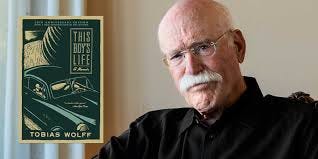
This Boy's Life: A Memoir by Tobias Wolff

The main purpose of scouting as I understood it was to accumulate symbols that would compel respect, or at least civility, from those who shared them and envy from those who did not.
This Boy’s Life: A Memoir by Tobias Wolff

Wolff’s memoir is about the first two decades of his life, including how he learned the “virtue of rebellion.” Wolff explores this virtue, including how he would “lie, cheat, steal, drink, run away and forge checks.”
In this sentence, we are firmly in the point of view of a young boy and how he sees Boy Scouts. It’s funny because it’s a raw, unabashedly instrumental view of the purpose of Scout merit badges. Young Wolff has recently joined the Boy Scouts and thinks he’s figured it out. At first glance, the sentence feels colloquial, with the opening, “The main purpose…” as if Wolff has inhabited his young consciousness and jotted it down. A closer look shows it’s full of style techniques.
It’s a mid-branching sentence, with the subject, “purpose,” separated from the verb, “was.” Not only does this syntactical structure create tension, but it also weaves in a sense of Wolff figuring things out. With the subordinate clause, “as I understood it,” there’s another injection of colloquial language. There’s also a sense of a revelation happening in real-time, and without commas setting the parenthetical apart, there’s even more flow, as if mimicking his thinking.
After the verb “was,” Wolff explains what he sees as the real purpose of scouting: “to accumulate symbols that would compel respect, or at least civility.” The diction has become more formal, or a higher register. By using the word “symbols,” Wolff reveals he’s new to the Boy Scouts; seasoned Scouts call them merit badges. The verb “would” suggests the expected social effect rather than certainty. Again, he’s guessing at their purpose. A sense of guessing is also in the phrase, “compel respect, or at least civility.” The revision downward from respect to civility subtly suggests his cynicism: true respect may be too much to expect.
Wolff ends with eloquence with two balanced prepositional phrases: “from those who shared them and envy from those who did not.” He repeats, “from those who,” a technique called anaphora, which creates a patterned rhythm. There’s also antithesis, or opposites, with those boys who have the symbols and those who don’t. Now we understand the young Wolff sees the world in binary: there are insiders and outsiders.
Wolff uses ellipses to sharpen the rhythm. If he’d included the omitted words, it would be: “For those who shared them and envy from those who did not share them.”
The sentence is a mix of colloquial and high register, with wisps of elegance through balance.
Your Turn
Open with your subject. Since you’re practicing, you can use “purpose.” Before you include your verb, add a short parenthetical to create a mid-branching sentence.
Now comes your verb. After that, include an infinitive phrase that elaborates on the purpose. Here, Wolff used “to accumulate.”
End with balance, the pairing of two things, by using two prepositional phrases. Can you add antithesis? Anaphora?
Try it!
How did it go?
If you like, share your sentence in the comments below. Our lovely, lively writing community has grown! I’m so happy about this, but, as you might suspect, to comment on everyone’s sentences has become overwhelming. For paid subscribers, I’ll be commenting to thank you for supporting my work. Please consider a paid subscription for $6 a month. Thank you!
Paid Subscribers Receive:
Comments on weekly posts.
Swimming in Style: A monthly Zoom gathering in which we analyze and write a stunning paragraph, filled with style techniques. Our next gathering is May 23 at 11:00 am Pacific Time. If you can’t make it, I’ll send a recording.
Sentence Intensive: A stunningly glorious sentence from a published work sent to you for five consecutive days with analysis and instructions on how to make it. We have four of these each year.
Access to 300 stunning sentences analyzed with instructions on how to make them.
Q&A: Access to questions posed by subscribers and answered by me, with wonderful insights from the writing community.
Here are the instructions on how to become a paying subscriber:
About Me
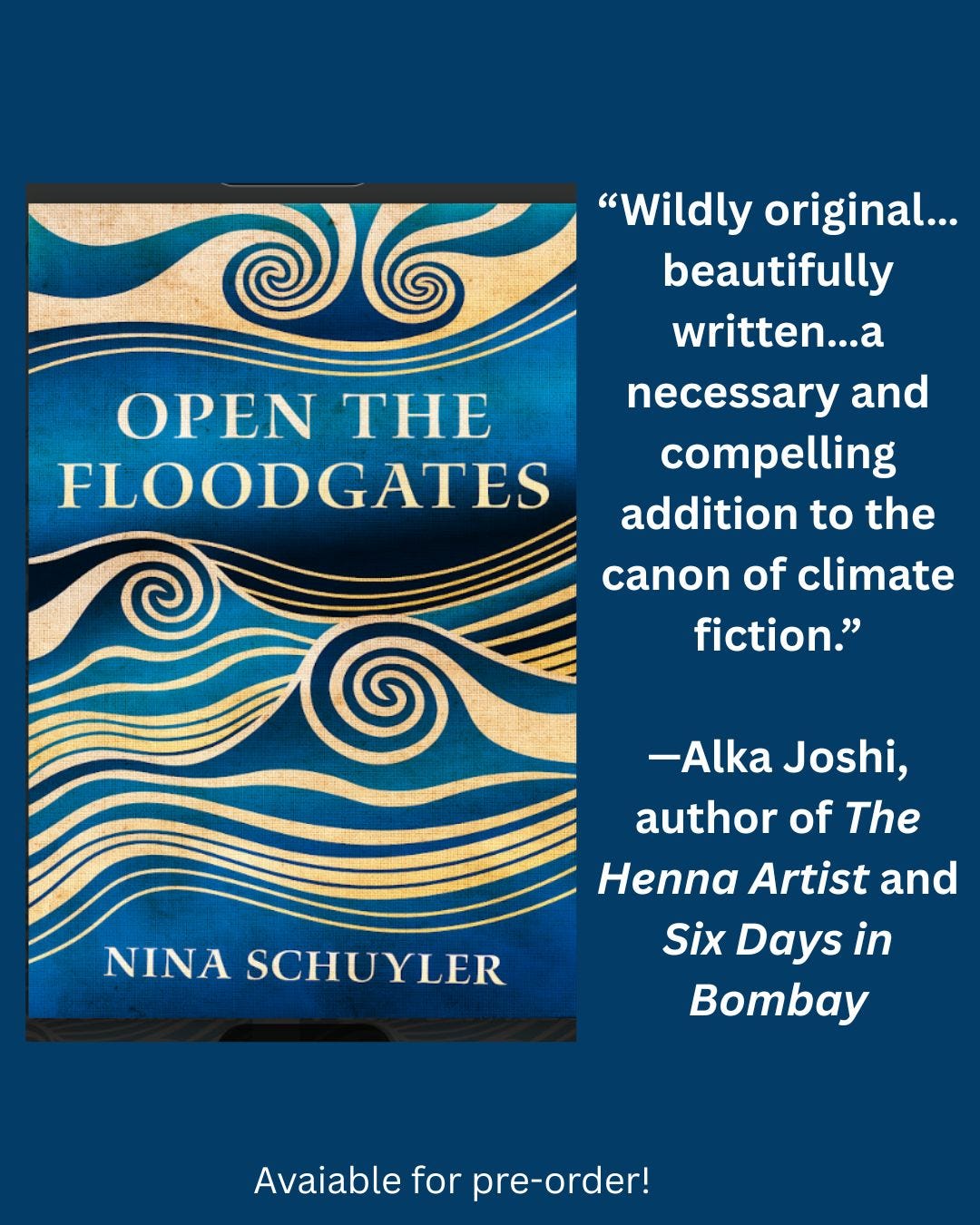
I’ve taught “Style in Fiction,” “Word for Word,” and “Cultivating Your Prose” for the University of San Francisco’s MFA program and Stanford Continuing Studies since 2007. My short story collection, In this Ravishing World, won the 2025 PEN Oakland Josephine Miles Literary Award. It was a finalist for the Northern California Book Award and won the W.S. Porter Prize and the Prism Prize for Climate Literature. My award-winning novel, Afterword, was published in May 2023. My novel, The Translator, was a finalist for the William Saroyan International Writing Prize, and The Painting was a finalist for the Northern California Book Award. My new novel, Open the Floodgates, will be published on September 15, 2026. www.ninaschuyler.com
Sentence Lovers! New second editions of my nonfiction books, How to Write Stunning Sentences and Stunning Sentences: A Creative Writing Journal, are available.
More advance praise for my new novel, coming in September! I’m immensely grateful to Alka Joshi, whose novel, Six Days in Bombay, is now out in paperback. Pre-orders mean a lot to the press and bookstores, which base their stock decisions on those numbers. Thank you for helping this novel find its way!
Consider a One-Time Donation
—a $5 tip, like applause, a cheer, a little gift for a job that brought you a bit of inspiration: Ko-fi.com/stunningsentences
The real reason Muriel gardened every day was to watch her neighbours, or at least sneak a peek here and there, to see how joyful parents greeted children after school, to see what it felt like to be missed.
The purpose of the Spanish Inquisition in Granada, if you ask the families of those imprisoned, was to extract hope from insincere Catholic converts, or at least money, for family fortunes bought freedom, while family poverty brought burning.