

The Low Ceiling
"Sonny's Blues," by James Baldwin

These boys, now, were living as we’d been living then, they were growing up with a rush and their heads bumped abruptly against the low ceiling of their actual possibilities.
“Sonny’s Blues,” by James Baldwin

James Baldwin was born in 1924 in Harlem and experienced poverty and racism. In his early twenties, he moved to Paris seeking freedom, and, as a novelist, essayist, and playwright, Baldwin became a leading Civil Rights voice—challenging America’s conscience with unflinching honesty. We’re still reading Baldwin today because he intertwined his deeply meaningful stories with deeply beautiful language.
In this sentence, I hear the word “now” call out to the word “then,” with the implied “back then,” and the comparison between the past and the present usually suggests a change, but not here.
The sentence opens as a mid-branching sentence with the adverb “now,” slipping in between the subject, “boys,” and the verb, “were living.” “Now” is set apart by two commas, which creates a pause, amplifying the word. We hear it loudly, and even more so because it’s heavily stressed. Baldwin didn’t need that word, which is readily implied, but then he’d lose the call-and-response motion. The response arrives in the dependent clause, “as we’d been living then.” He creates more music through the repetition of “living” at the ends of the clauses, a technique called epistrophe.
Baldwin’s second independent clause is connected by a comma, and yes, this is a comma splice, and yes, your English teacher would be upset, but you’re a creative writer, as is Baldwin, and he wants to create speed, because, as the second base clause says, “they were growing up with a rush.”
After the conjunction, “and,” there’s the third independent clause, “their heads bumped abruptly against the low ceiling of their actual possibilities.” This time to connect the clause, Baldwin eliminates the comma before the conjunction “and,” and this, too, is a technique for creating speed. For me, the adverb “aBRUPTly” feels like many bumps against that low ceiling (heavy stress capitalized).
He uses a metaphor comparing the abstract idea of possibilities to a structure with a ceiling. And for these boys, as well as the narrator, that ceiling is low. Baldwin saturates this clause with plosives—harsher sounds—using “b, d, t, c, p” in the words “bumped, abruptly, against, actual possibilities”—fitting sounds given the sentence’s content with the sense of growth and harsh constraints.

Your Turn
Open with your first base clause. Separate your subject from your verb to create a mid-branching sentence. Since you’re practicing, you can use “now” or a word you want to amplify.
Add a dependent clause that includes “back then” or “then.” Can you use epistrophe, ending the base clause and the dependent clause with the same word?
Add a comma and your second base clause.
Add a conjunction and no comma and your third base clause. Can you use a metaphor?
Try it!
How did it go?
If you like, share your sentence in the comments below. Our lovely, lively writing community has grown! I’m so happy about this, but as you might suspect, commenting on everyone’s sentences has become overwhelming. For paid subscribers, I’ll be commenting to thank you for supporting my work. Please consider a paid subscription for $6 a month. Thank you!
Paid Subscribers Receive:
Comments on weekly posts.
Swimming in Style: A monthly Zoom gathering where we analyze and write a stunning paragraph filled with style techniques. Our next gathering is Sunday, June 28, at 11:00 am Pacific Time. If you can’t make it, I’ll send a recording.
Sentence Intensive: A stunningly glorious sentence from a published work sent to you for five consecutive days with analysis and instructions on how to make it. We have four of these each year.
Access to over 300 stunning sentences analyzed with instructions on how to make them.
Q&A: Access to subscriber questions and my answers, with wonderful insights from the writing community.
Here are the instructions on how to become a paying subscriber:
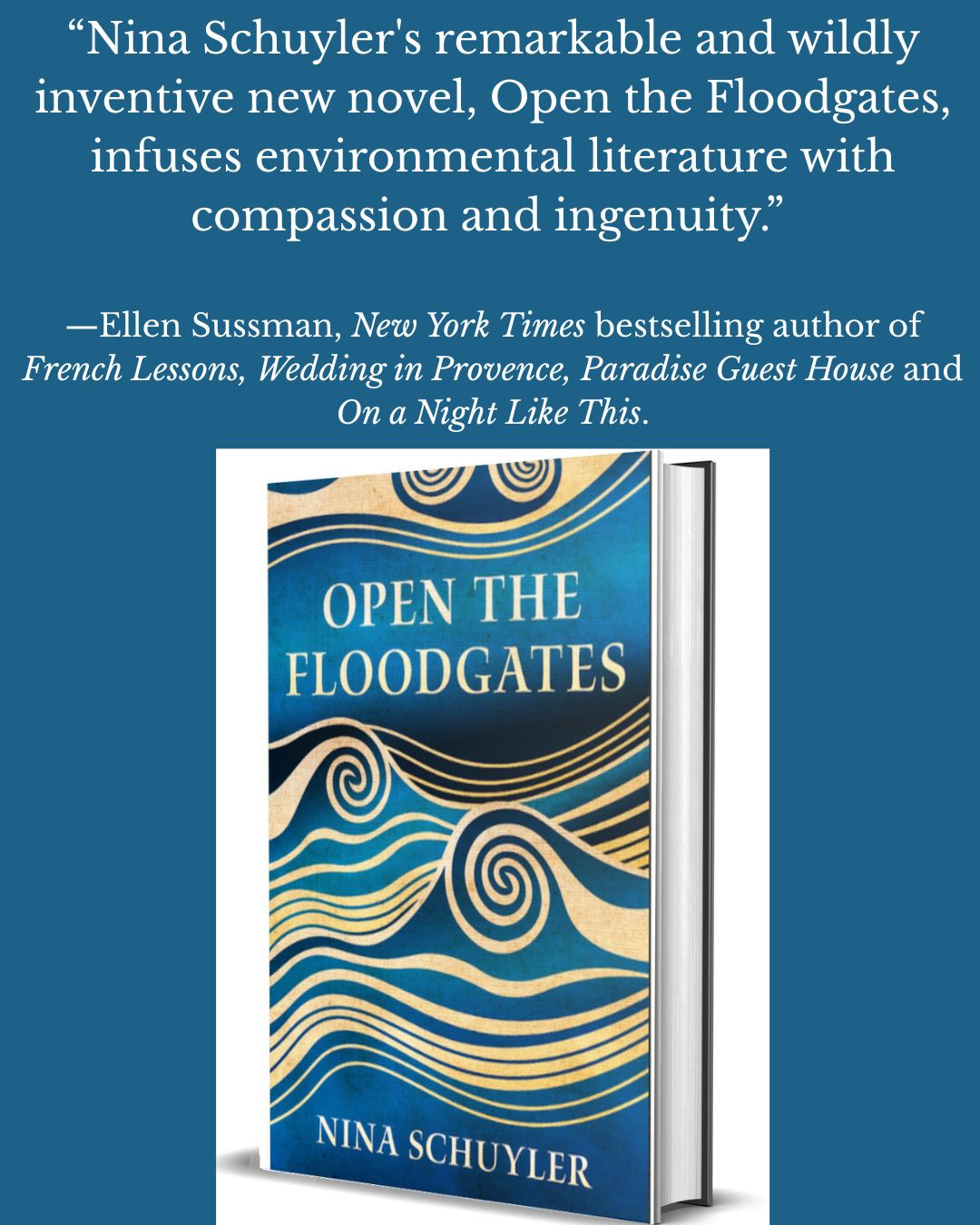
Advance Praise! I’m thrilled to receive these generous words from the acclaimed writer, Ellen Sussman. Open the Floodgates is available for pre-order. Pub date: September 15, 2026
These old women, now, were seated at the table as they were seated as teenagers then, they were decades weathered, their sons and daughters and lovers left behind in the dust, and they leaned in, raised their glasses to toast a robust, ageless thing, their friendship.
The dogs, today, were barking just as they always did back then, they were impatient and intent on getting through the gate firm in their belief that untold excitement lay beyond the limited confines of their imagination.